Remodeling your home is one of the most exciting projects you can take on as a homeowner. Whether you’re upgrading your kitchen, renovating a bathroom, or transforming your entire home, remodeling allows you to create a space that truly fits your lifestyle.
But here’s the truth most homeowners don’t realize until it’s too late:
The success of your remodel depends far more on the planning stage than the construction itself.
Every year, thousands of homeowners start remodeling projects with excitement—only to face delays, unexpected costs, poor design choices, or unfinished work. In many cases, these issues could have been avoided with the right preparation.
After more than two decades in the construction and remodeling industry, we’ve seen the same mistakes happen again and again. The good news is that once you understand them, they are completely avoidable.
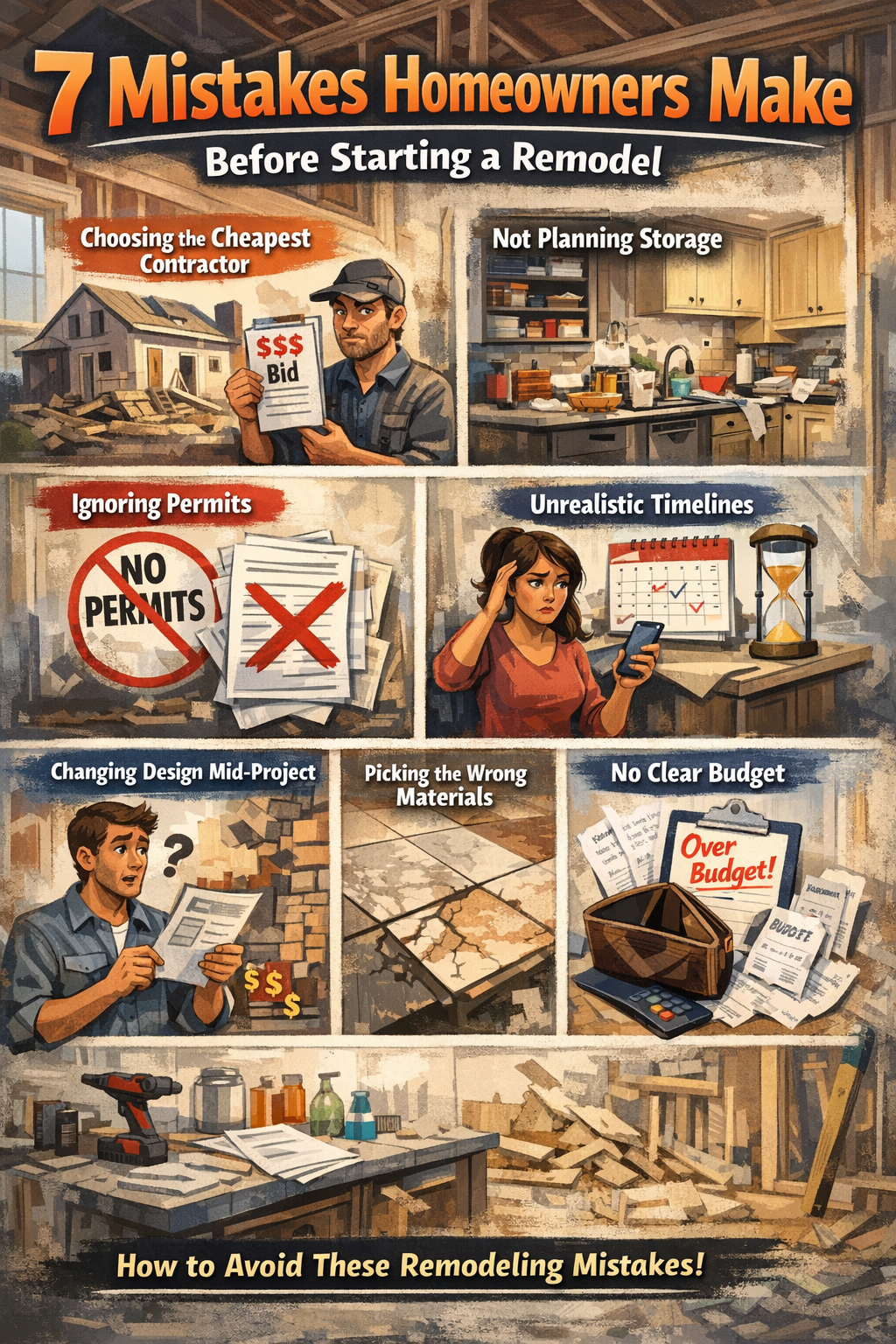
In this guide, we’ll walk through the 7 most common mistakes homeowners make before starting a remodel, explain why they happen, and show you how to avoid them so your project runs smoothly from start to finish.
Mistake #1: Choosing the Cheapest Contractor
One of the most common and costly mistakes homeowners make is choosing a contractor based solely on price.
It’s completely understandable. Remodeling projects are expensive, and when you receive multiple quotes, the lowest number can feel like the obvious choice.
However, in construction, the cheapest option often becomes the most expensive in the long run.
Why Cheap Bids Are a Red Flag
When one contractor’s price is dramatically lower than the others, it usually means one of the following:
• They underestimated the project
• They are using lower-quality materials
• They plan to charge additional “change orders” later
• They lack experience with similar projects
• They are not properly licensed or insured
In many cases, contractors who offer extremely low bids do so to win the job quickly. Once construction begins, unexpected costs begin appearing, or the work quality falls below expectations.
Homeowners then face difficult decisions: pay more to fix mistakes, hire another contractor, or live with poor workmanship.
The Real Cost of Cheap Work
Poor construction can lead to serious issues such as:
• Plumbing leaks behind walls
• Electrical hazards
• Structural issues
• Tile or flooring failure
• Cabinets installed incorrectly
• Failed inspections
Fixing these problems often costs two to three times more than doing the job correctly the first time.
How to Avoid This Mistake
Instead of choosing the cheapest contractor, focus on value and experience.
Look for contractors who:
• Have a valid license and insurance
• Provide detailed written estimates
• Show completed projects similar to yours
• Offer clear timelines and communication
• Have strong reviews and referrals
A reliable contractor will take the time to understand your goals, provide honest pricing, and guide you through the process.
Remember: a good contractor protects your investment.
Mistake #2: Not Planning Enough Storage
Many homeowners focus heavily on aesthetics during a remodel but overlook something just as important: functional storage.
Beautiful kitchens and bathrooms look great in photos, but if they don’t provide enough storage, daily life quickly becomes frustrating.
Why Storage Planning Matters
Think about how your household uses space every day.
Where do groceries go?
Where do appliances live?
Where do towels and cleaning supplies get stored?
Without proper storage planning, even a newly remodeled home can feel cluttered and disorganized.
Common Storage Oversights
During remodeling projects, homeowners often forget to plan for:
• Pantry storage
• Small kitchen appliances
• Trash and recycling areas
• Bathroom linen storage
• Cleaning supplies
• Laundry storage
• Hidden charging stations
These details may seem minor during the design phase, but they dramatically impact how comfortable your home feels after the remodel is complete.
Smart Storage Solutions
Experienced designers and contractors often recommend incorporating features like:
• Deep drawer cabinets instead of standard shelves
• Pull-out pantry systems
• Built-in organizers
• Vertical storage solutions
• Hidden appliance garages
• Built-in shelving
These solutions maximize space while keeping your home organized and visually clean.
How to Avoid This Mistake
Before finalizing your design, ask yourself:
• Where will everything go?
• What items do we use every day?
• What items need hidden storage?
Working with an experienced remodeling contractor can help identify storage opportunities you may not have considered.
your remodel should improve how your home works, not just how it looks.
Mistake #3: Ignoring Permits and Local Regulations
Permits are one of the most misunderstood aspects of remodeling, and unfortunately, some homeowners attempt to skip them altogether.
This can create serious legal and financial problems later.
What Are Remodeling Permits?
Permits are official approvals from your local city or county that confirm your remodeling project meets building codes and safety standards.
Permits are typically required for:
• Electrical changes
• Plumbing modifications
• Structural changes
• Room additions
• Kitchen remodels
• Bathroom remodels
• Window or door changes
In many cities across California, permits are required for most major remodeling work.
Why Permits Matter
Permits exist to ensure construction meets safety standards.
Without them, projects may include:
• Unsafe wiring
• Improper plumbing
• Structural weaknesses
• Code violations
Permits also protect homeowners by ensuring work passes official inspections.
The Risks of Skipping Permits
Some contractors may suggest avoiding permits to save time or money.
This is a major red flag.
If work is done without permits, homeowners may face:
• Fines from the city
• Mandatory demolition of completed work
• Problems selling the home later
• Insurance issues after damage or accidents
Real estate transactions often uncover unpermitted work during inspections, which can delay or even cancel home sales.
How to Avoid This Mistake
Always confirm that your contractor will:
• Pull the required permits
• Schedule inspections
• Follow local building codes
Professional contractors handle the permitting process as part of their service.
Permits might add time to the project timeline, but they provide long-term protection and peace of mind.
Mistake #4: Having Unrealistic Timelines
Another common mistake homeowners make is expecting remodeling projects to happen much faster than they realistically can.
While television shows often portray renovations happening in a few weeks, real construction projects involve multiple stages that take time.
What Actually Happens During a Remodel
A typical remodeling timeline includes several steps:
- Planning and design
- Material selection and ordering
- Permit approvals
- Demolition
- Structural work
- Electrical and plumbing installation
- Inspections
- Drywall and finishes
- Cabinet installation
- Flooring and painting
- Final inspections
Each stage depends on the previous one being completed properly.
Factors That Can Affect Timelines
Several factors may impact the speed of your remodel:
• Permit approval times
• Material delivery delays
• Custom cabinetry production
• Inspection scheduling
• Weather conditions
• Structural surprises behind walls
These variables make it difficult to guarantee extremely fast timelines.
Typical Remodeling Time frames
While every project is different, here are general estimates:
Bathroom remodel:
3–6 weeks
Kitchen remodel:
6–10 weeks
Whole home renovation:
3–6 months
Room addition or ADU:
6–10 months
Working with experienced contractors helps ensure projects move efficiently without sacrificing quality.
How to Avoid This Mistake
Plan your remodel with flexibility and realistic expectations.
Ask your contractor for:
• A detailed project schedule
• Clear milestone phases
• Communication about delays
Understanding the timeline from the beginning reduces stress and helps the process stay organized.
Mistake #5: Changing the Design Mid-Project
Design changes during construction are one of the biggest reasons remodeling projects go over budget.
It’s common for homeowners to change their minds after construction begins. They may see something online or rethink a design decision.
However, once work has started, even small changes can create major complications.
Why Changes Are Expensive
During construction, everything is connected.
For example, moving a sink might require:
• Changing plumbing lines
• Modifying cabinets
• Adjusting countertops
• Moving electrical outlets
What looks like a small change can involve several different trades.
The Domino Effect
Late design changes often lead to:
• Additional labor costs
• New material orders
• Construction delays
• Inspection rescheduling
In some cases, completed work must be demolished and redone.
How to Avoid This Mistake
Spend enough time in the design and planning phase.
Before construction begins, finalize:
• Layouts
• Cabinet styles
• Countertops
• Flooring
• Lighting
• Appliances
• Hardware
Review every detail with your contractor.
When the design is finalized early, construction moves faster and stays within budget.
Mistake #6: Choosing Materials Based Only on Looks
Many homeowners fall in love with materials because of how they look in showrooms or online photos.
But appearance should never be the only factor when selecting materials.
Your home is a functional space that experiences daily wear and tear.
Why Durability Matters
Certain materials may look beautiful but perform poorly in high-traffic areas.
For example:
• Some marble surfaces stain easily
• Low-quality cabinets warp over time
• Cheap flooring scratches quickly
• Certain tile finishes are slippery when wet
Choosing the wrong materials can lead to repairs or replacements within a few years.
Balancing Style and Function
A well-designed remodel combines both beauty and durability.
Contractors often recommend materials that are proven to perform well in residential environments.
Examples include:
• Quartz countertops
• Porcelain tile
• Engineered hardwood
• High-quality cabinetry
• Durable paint finishes
These materials offer strong performance while maintaining modern design aesthetics.
How to Avoid This Mistake
When selecting materials, ask questions such as:
• How durable is this material?
• Is it easy to maintain?
• How does it perform in kitchens or bathrooms?
• Will it last for many years?
Experienced contractors can recommend materials that balance style, longevity, and value.
Mistake #7: Not Setting a Realistic Budget
Budget planning is one of the most important parts of a remodeling project.
Unfortunately, many homeowners begin renovations without fully understanding the true costs involved.
Why Budgets Often Go Over
Homeowners frequently underestimate costs because they forget to include:
• Labor costs
• Permit fees
• Material upgrades
• Unexpected repairs
• Design services
• Temporary living adjustments
Hidden issues inside walls—such as plumbing damage or electrical problems—can also increase costs.
The Importance of a Contingency Fund
Professional contractors recommend setting aside 10–20% of your budget for unexpected issues.
For example:
If your remodel budget is $80,000, you should plan an additional $8,000–$16,000 contingency.
This protects you from stress if unexpected repairs appear.
How to Avoid This Mistake
Start by discussing your realistic budget with your contractor early.
A professional contractor can help you:
• Prioritize important upgrades
• Choose materials that fit your budget
• Avoid costly design changes
• Plan the project in phases if needed
Transparency about budget helps create a project that works financially from the beginning.
Final Thoughts: Remodeling Should Be Exciting, Not Stressful
A successful remodel is not just about beautiful design.
It’s about planning, communication, and working with the right professionals.
By avoiding these common mistakes, you can dramatically increase the chances that your remodeling project will run smoothly, stay within budget, and deliver results you’ll enjoy for many years.
The most successful remodeling projects begin with thoughtful planning and a trusted contractor who guides homeowners through every stage of the process.
When done right, remodeling is one of the best investments you can make in your home and lifestyle.
Thinking About Remodeling Your Home?
At Romano Builders, we help homeowners plan and complete remodeling projects with clarity, transparency, and expert craftsmanship.
Whether you’re considering a kitchen remodel, bathroom renovation, room addition, or full home transformation, our team is here to guide you every step of the way.
Contact us today to schedule a consultation and start planning your project the right way.